
PREMA-SERVICE
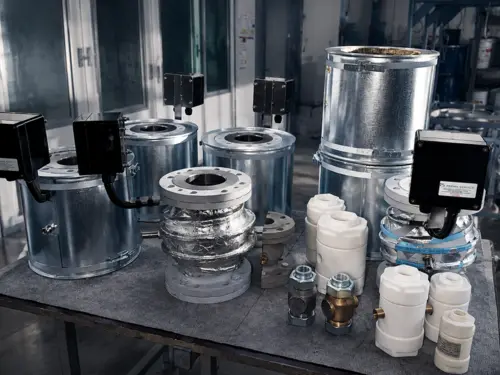
Sturdy and reliable
Valve technology
PREMAFLEX pinch valves enable the safe shut-off and control of a wide range of media – from liquids and viscous products to abrasive or aggressive substances. Their robust design and full-bore flow path have proven reliable in a wide variety of industrial applications.
-
We shut off demanding media safely and cost-effectively.
PREMAFLEX VALVES
Robust valve solutions in metal and plastic – tailored to the medium, process and operating conditions.
-
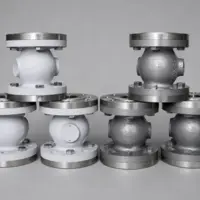
PREMAFLEX Metal
-
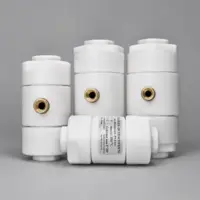
PREMAFLEX Plastic
-
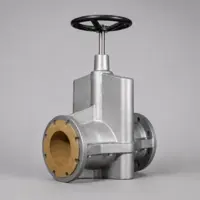
Handwheel & Spring-Return Shut-Off Valves
-
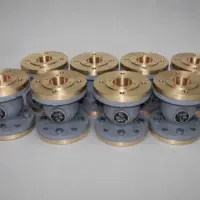
Bespoke products
-
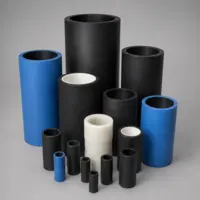
Sleeves
-
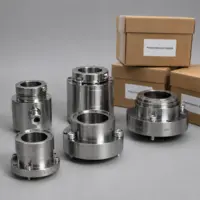
Service & Spare Parts
They are reliable, robust, cost-effective and available in a wide range of nominal diameters. We also stock all valve components in various material grades to offer you, our customer, the widest possible range of applications.
PREMAFLEX pinch valves are primarily used, for example, in the pneumatic conveying of all types of bulk materials and are frequently employed in the food and pharmaceutical industries, as well as in the plastics and chemical industries. These pneumatic shut-off valves are also used in environmental technology, wastewater treatment, plant engineering, the construction industry and mining. PREMAFLEX pinch valves are used for sealing, shutting off, regulating and metering various materials and raw materials.
How PREMAFLEX pinch valves work
How PREMAFLEX pinch valves work
Frequently Asked Questions
Useful information about pinch valves
Can the pneumatically operated pinch valve also be used in a vacuum?
Pneumatically operated pinch valves can certainly be used at low vacuum levels. They are considered vacuum-resistant up to a negative pressure of 100 mbar.
Can a pneumatically operated pinch valve also be controlled using a liquid (e.g. water)?
Pneumatically operated pinch valves can be controlled using gas and air as well as liquid media. The reliable operation of the pinch valve is therefore independent of the control medium. The only requirement is a sufficiently high differential pressure of 2 bar to ensure that the sleeve closes in a lip-like manner. In addition to water, other non-viscous and clean liquids are also permitted.
What should I look out for when selecting a pinch valve if my fluid is highly abrasive?
Short closing and opening times are a key feature of systems using a pneumatically operated pinch valve. It is this characteristic that protects the valve from the effects of abrasive media. You should therefore ensure that the solenoid valve is fitted directly to the pinch valve and that a quick-release vent is installed.
Which standard or DIN specification are the pneumatically operated pinch valves manufactured to?
A pneumatically operated pinch valve is subject to the Pressure Equipment Directive (PED) 2014/68/EU. The conformity assessment procedure depends on the pressure and nominal diameter of the valve in question. However, following the replacement of the old Pressure Equipment Directive 97/23/EC, all existing certificates remain valid. The previous EC Declaration of Conformity is replaced by the new EU Declaration of Conformity under the Pressure Equipment Directive.
What sets your programme apart from those of your competitors?
As a specialist supplier with over 40 years of experience, and as part of the Rohrer Group, we combine hands-on technical expertise with the reliability of an internationally positioned company. Whether you are an owner, an employee or a customer: sustainability is a matter of particular importance to us. Consequently, our priority is to find tailored solutions for our customers, and only then do we consider economic efficiency. Furthermore, we guarantee reliability through our dedicated staff, many years of experience, quality and environmental management, as well as ongoing and comprehensive certification both at home and abroad. We are represented by branch offices in many countries across Europe, Asia, the Middle East, the CIS states, South Africa, South America and Australia. In short: flexible solutions, high quality and long service life are not just buzzwords for us. We put them into practice!
What happens if the compressed air supply fails?
The operating principle of a pneumatically actuated pinch valve is relatively simple. When a pressure of at least 2 bar is applied, a flexible elastomer sleeve is compressed into a lip shape, thereby closing off the cross-section of the pipe. The pressure is usually supplied by air. Should the compressed air supply ever fail and the air escape, the pinch valve opens automatically.
Does PREMA-SERVICE also supply pneumatic pinch valves with a safety position (normally closed)?
Should the escape of control air and the associated automatic opening of the pinch valve pose a safety risk, the pneumatically operated pinch valves can be fitted with our safety circuit. This ensures that the valve remains closed in the event of a power or compressed air failure. In the case of hose pinch valves, spring-loaded pneumatic cylinders can also be used. This ensures that the pinch valve can be used to shut off, regulate or meter solid or liquid materials.
Do vibrations in the system damage the pneumatically operated pinch valve?
A pneumatically operated pinch valve consists of both rigid and fixed components as well as elastic components. The assembly is relatively simple. The elastomer sleeve is clamped in place within the valve by the two clamping flanges. We are not aware of any damage caused by vibrations in PREMAFLEX pinch valves. However, as a general precaution, care must be taken to ensure that all pipework is laid without tension in order to prevent any potential damage.
How are the pneumatically operated pinch valves maintained, and what are the spare and wear parts?
A pneumatically operated pinch valve from PREMA-SERVICE requires no special maintenance. The components are largely wear-free. Only the elastomer sleeve should be checked at regular intervals and replaced if necessary. To do this, the clamping flanges are loosened and the squeeze valve’s sleeve is replaced in a few simple steps. Detailed instructions are provided with the PREMAFLEX squeeze valve upon purchase, as part of the technical documentation.
What is the optimal installation position for pneumatic pinch valves?
The ideal installation position for a pinch valve is horizontal, with the air connection at the bottom. In principle, however, a PREMAFLEX pinch valve can be installed in any conceivable position. Even an air connection at the top is not a problem. You should simply check whether the compressed air might cause condensation to build up, which would then need to be drained at regular intervals.
Are pneumatically operated pinch valves gas-tight?
Pneumatically operated pinch valves are not gas-tight. If there is a sufficient pressure differential between the control air and the operating pressure, a pinch valve achieves a certain degree of watertightness. This means it is drip-tight. However, a pinch valve is considered hermetically sealed with respect to the external environment.
How much air do the pneumatically operated pinch valves consume per closing cycle?
Every user’s aim is to keep their energy costs as low as possible. This naturally includes the generation of compressed air. We therefore strive not only to improve performance but also to minimise control air consumption as much as possible. Our PREMAFLEX pinch valve is one of the most economical pinch valves on the market in terms of air consumption. The volume of air required when the pinch valve is closed depends on the nominal diameter and can be found in the relevant technical data sheets.
How do I find the most suitable pneumatically operated pinch valve for my application?
We won’t leave you to choose a pneumatically operated pinch valve on your own. Customer-focused technical advice is very important to us. Only valves that are considered in the context of the pipework system can guarantee perfect operation in the long term. The more details we have about your application, the more accurately we can address your specific requirements for a suitable pinch valve from both economic and technical perspectives, and specify the appropriate solution with professional expertise.
Is a pneumatically operated pinch valve suitable for flooding, or even for underwater installations?
Its 100 per cent hermetic seal against the outside air and its watertight construction mean it can also be used underwater. Please let us know your exact application when placing your order. This will enable us to select the correct size of pinch valve and, if it is to be used underwater, to apply the appropriate coating. A pinch valve intended for underwater use is given a special coating to prevent it from ‘rotting’ too quickly.
How does the pneumatically operated pinch valve open?
If there is no longer any control air supplied to the sleeve of the pinch valve, two characteristics ensure the rapid and complete return of the lip-shaped, compressed sleeve. Firstly, the sleeve possesses enormous rebound elasticity. This means that the sleeve ‘remembers’ its initial position and snaps back into it. Secondly, the operating pressure within the pipework causes the sleeve to be pushed back into its initial position. However, the operating pressure is not strictly necessary; it merely assists the opening process. Furthermore, the sleeve possesses enormous rebound elasticity. This means that the elastomer ‘remembers’ its original position and snaps back into it.
What is the closing force of a pneumatically operated pinch valve?
Pneumatic pinch valves generally require a minimum closing pressure of 2 bar. The closing pressure corresponds to the difference between the fluid pressure and the control air pressure. It depends on the nominal diameter and may, in some cases, be less than 2 bar. Please refer to our technical data sheets for the exact closing pressures.
How is it possible to reduce or optimise the closing and opening times of pneumatically operated pinch valves?
There are various ways to reduce or optimise the opening and closing times of pinch valves. Firstly, compressed air supply lines with a larger cross-section can be installed. Secondly, it is possible to install a solenoid valve with a higher flow rate. Last but not least, quick-release valves can be fitted. The higher flow rate reduces the respective times. This results in more efficient operation and better results.
Is there a pneumatically operated pinch valve that closes in the event of a loss of air supply?
Pinch valves are designed to open automatically in the event of a loss of air supply. To prevent this, mechanical hose pinch valves can be used in conjunction with a spring-return pneumatic cylinder. This ensures that the pinch valve closes even in the event of a loss of air supply.
How do I receive position feedback indicating whether the pneumatically operated pinch valve is open or closed?
This issue can be easily resolved using what is known as a pressure switch. However, this is not as efficient as a mechanical pinch valve. This is because mechanical pinch valves are fitted with what are known as limit position sensors, the function of which cannot be fully replaced by a pressure switch.
Can a pneumatically operated pinch valve also be operated using water or nitrogen?
It is possible to operate a pneumatically actuated pinch valve using media other than compressed air. All standard, neutral gases or fluids can be used for this purpose. Consequently, it is also possible to use water or nitrogen as the medium. It does not, therefore, always have to be compressed air.
What body and flange materials are available for the pneumatically operated pinch valves?
With the pneumatically operated pinch valve, it is of course also possible to specify and select a material for the body and the flange. This depends on where the pinch valve is to be used and the performance it is required to deliver. The metallic materials available include grey cast iron, aluminium, steel and stainless steel. Various plastics are also available. The plastic pinch valve offers high resistance to many chemical influences, as well as high hardness and rigidity.
Is it possible to prevent a pneumatically operated PREMAFLEX pinch valve from opening and closing in the event of a loss of compressed air and/or a power cut?
Yes, by means of a safety circuit. This prevents the pinch valve from opening or closing in the event of a loss of air pressure and/or power.
The safety circuit consists of a non-return valve, a pressure regulator, a compressed air reservoir and a suitable solenoid valve (normally open or normally closed). Please do not hesitate to contact us if you require further information on this matter.
What accessories do you recommend for the pneumatically operated pinch valves?
The pneumatically operated pinch valve comes with a comprehensive range of accessories. It is recommended to use a pressure/filter regulator, a pressure switch and a quick-release vent valve. To control the pneumatically operated pinch valve, it is necessary to install a solenoid valve when in use.
Have questions?
Write us or call us!
- WolfgangSales & Technology
Körber
worldwide represented
our partners
Valves4You Ltd
Atherton Way 124
OL13 0LE Bacup
United Kingdom
LAREKO
Stefana Batorego 107/B
87-100 Toruń
Poland