
PREMA-SERVICE
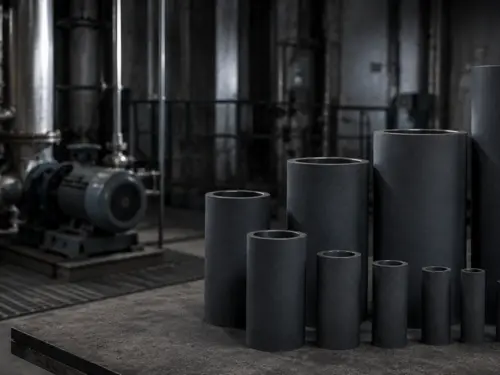
The heart of reliable pinch valves
Sleeves
The highly elastic sleeves form the core of our pinch and hose valves. Integrated fabric reinforcements ensure a smooth closing action, a long service life and reliable operation even under demanding operating conditions.
Thanks to the robust and simple design of our PREMAFLEX pinch valves, this spare part can be replaced in just a few simple steps, thereby helping to keep maintenance costs low.
With the help of detailed installation instructions, a new sleeve can be fitted on site, thereby significantly reducing production downtime. For this reason, our extensive stock includes almost all standard nominal diameters and elastomer grades to suit your specific operating conditions.
Summary table of the elastomer grades used in our sleeves
| NR Standard | Natural rubber, black | max. 80°C |
| NR SKAZ | Natural rubber, black (particularly abrasion-resistant) | max. 80°C |
| NR LQ-light | Light-coloured natural rubber, food-grade | max. 80°C |
| NR LQ-black | Natural rubber, food-grade, black | max. 100°C |
| NR electrically conductive | Natural rubber, electrically conductive | max. 80°C |
| CR | Black neoprene | max. 100°C |
| NBR | Nitrile-butadiene, black | max. 100°C |
| NBR LQ – light | Nitrile–butadiene, food-grade, light | max. 100°C |
| NBR E conductive | Nitrile–butadiene, electrically conductive | max. 100°C |
| EPDM | EPDM black | max. 120°C |
| EPDM LQ – light | EPDM food-grade, light | max. 120°C |
| FPM | Viton black | max. 100°C |
| MQ | Translucent silicone | max. 150°C |
We are happy to assist you in selecting other suitable material grades.
Frequently Asked Questions
Useful information about pinch valve sleeves
How are the sleeves for PREMAFLEX pinch valves manufactured?
The pinch valve sleeves are manufactured by hand, using what are known as mandrels. This involves several stages of work before the sleeve is complete. The whole process is very labour-intensive and time-consuming. For this reason, the prices of pinch valve sleeves cannot be compared with those of extruded rubber hoses.
Why are fabric inserts incorporated into the sleeves?
The fabric inserts have a specific function. They provide compressive strength and ensure that the cuff closes in a lip-like manner.
What do the markings on the sleeve tell us?
The cuffs are marked immediately after production. The marking provides you and us with information about the quality of the rubber and the period in which they were manufactured.
Can I also fit rubber sleeves from other manufacturers into PREMAFLEX pinch valves?
No, our sleeves are specifically designed to fit our pinch valves. We cannot guarantee that they will work with products from other manufacturers.
What is the maximum operating temperature that PREMAFLEX pinch valve sleeves can withstand?
The maximum operating temperatures of the pinch valve sleeves depend on the type of rubber used; for example, they are +130°C for Viton and +150°C for silicone.
Why aren’t there any PTFE pinch valve sleeves?
PTFE is not suitable due to its physical and mechanical properties.
Which pinch valve sleeve is best suited to my application?
The selection of the most suitable sleeve grade always depends on the conveyed medium, the operating and ambient temperatures, and the operating conditions.
As a general rule, natural rubber is the best choice for all media that do not have any special requirements, such as chemical resistance, food-grade suitability or operating temperatures above 80°C.
For all other media, we should carry out a assessment. Please contact us regarding this.
Are there also pinch valve sleeves for the food industry that are FDA-certified?
Yes, we stock food-grade sleeves in natural rubber, NBR (nitrile), EPDM and silicone. We would be happy to issue a certificate for your order on request.
Which sleeve grades are available in an electrically conductive version?
On request, we stock natural rubber, NBR (nitrile), EPDM, neoprene and butyl in electrically conductive grades.
What do I need to change the sleeve myself?
Of course, you’ll need a new sleeve for your faulty valve.
We’ll also provide you with a special adhesive that acts as a lubricant and helps to ensure the sleeve sits securely in the clamp. The repair kit also includes fitting blocks. We’ll be happy to provide you with fitting instructions.
Can I use assembly grease as well?
No, under no circumstances. Assembly grease and/or other assembly compounds can cause the sleeve to slip out of the clamp during operation. Furthermore, in the worst-case scenario, unsuitable assembly compounds and greases can damage the sleeve, for example by causing it to swell.
Have questions?
Write us or call us!
- WolfgangSales & Technology
Körber